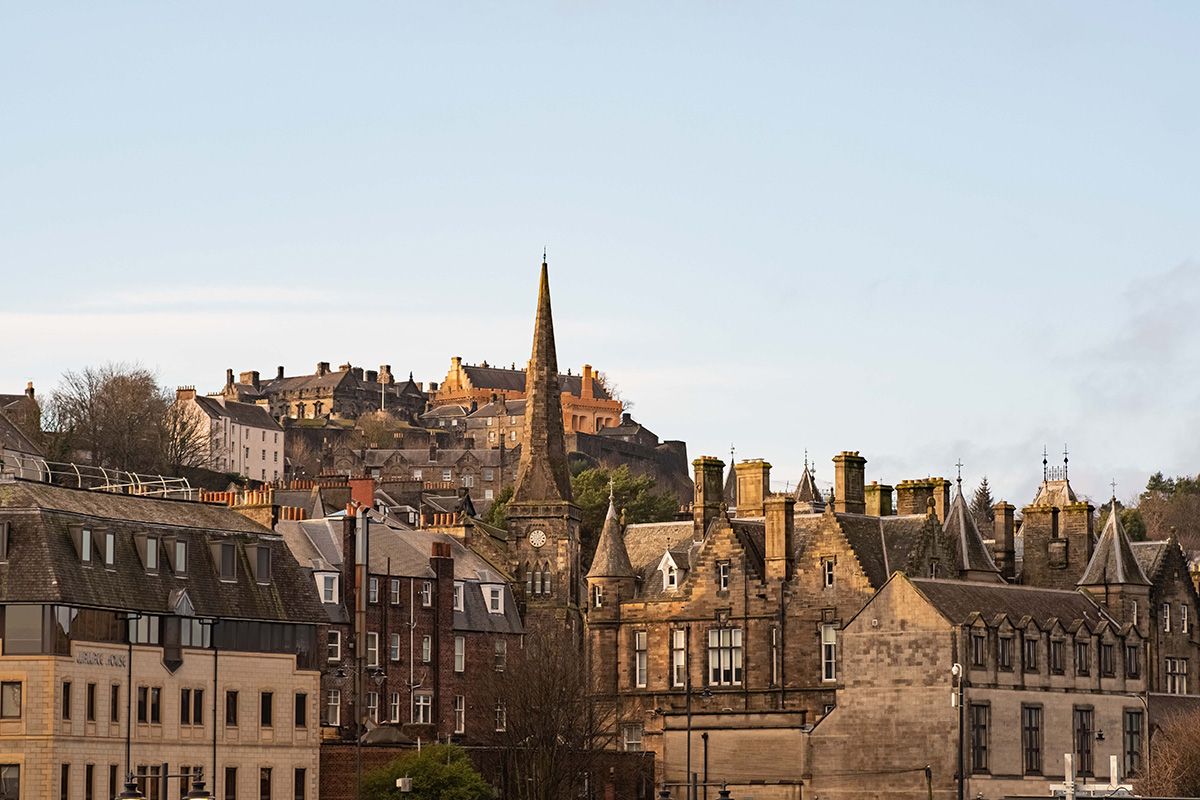
Up until six years ago, Scotland was almost completely unknown to me. It is true that I had visited Edinburgh and Glasgow several times while I lived in England, but I knew nothing beyond those two cities. Once I had settled down in Scotland, I was overtaken by the curiosity to get to know the country of William Wallace better.
During my first year, I visited many other cities, besides its incredibly beautiful natural landscapes. But, if I had to pick just one city, that would be, without a doubt, Stirling. Some of you may think that Edinburgh is prettier, but I will go beyond that. Not only does Stirling have part of the beauty of Scotland’s capital city, but the history of this country cannot be understood without Stirling. During the Middle Ages, it was nicknamed as “the gateway to the Highlands”, as anyone who had to travel to the Highlands or the Lowlands needed to go through Stirling.
Thanks to its history and, of course, to its castle and monuments, it is one of the most visited cities in all of Scotland: around one million people drop by this small city every year, which was the most important city in Medieval Scotland. And, in this article, I would like to provide you with some reasons to visit it, if you are still sitting on the fence about it.
1. Because of its history
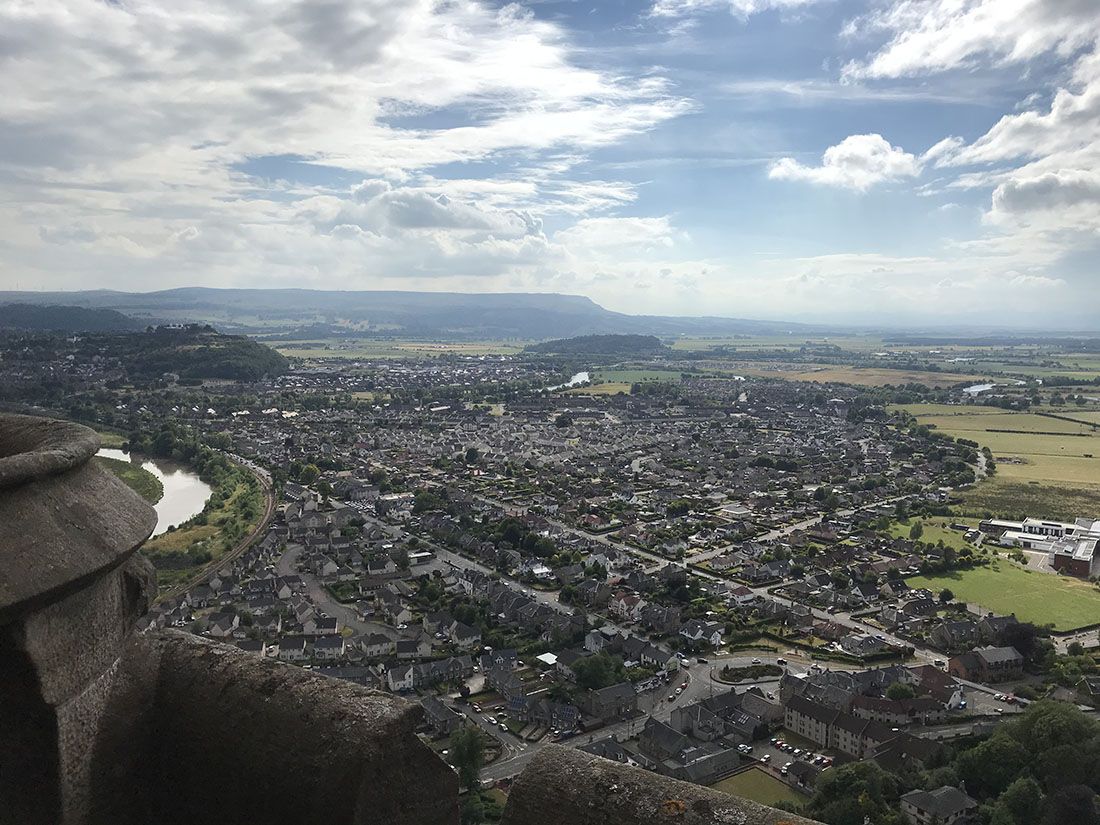
Stirling has a fascinating history that goes hand in hand with Scottish history, given that Scotland could not be conceived if Stirling did not exist. The region where this city can be found had been inhabited for over 3 000 years, as the first settlements appeared on different hills, and also on the spot where the city castle can be seen today.
By the 1000s, the first fort would be built on the place where its castle stands today. From this moment on, Stirling would begin to grow, and it would start to be used as a royal residence. King David I, who ruled during the 1100s, would invest it with the status of a royal burgh, and he established the feudal system that lingered until 2004.
Many battles have been fought on Scottish ground, but Stirling bore witness to one of the most important and famous clashes in the history of cinema: Braveheart. Thanks to the river Forth and its fine connections with the world, Stirling has always looked into the future. The most regal style of architecture would begin to dominate the city streets during the 1700s, when around 10 % of its population lived in poverty, which was unusual at the time. From 4 000 people living there in the 1700s, its populace would soar to 12 000 a century later.
The Industrial Revolution arrived and, along with it, the first train station. The Scottish Central Railway was built from Perth to Greenhill, connecting Central Scotland with the south and north of the country, with one of its stops in Stirling, which gave rise to the tourism comeback that this city has experienced for decades, and thanks to which Scotland’s former capital city is not only remembered for the battles it has seen, but also for its importance in Scottish history.
2. For its castle
Regarded as one of the most important castles in Scotland, for its history and architecture, being one of the best preserved Renaissance castles in the United Kingdom. Nowadays, it receives over half a million visitors every year.
It was an unassailable fortress, owing to the strategic nature of its location. It was also a residence for kings and queens, such as Mary Stuart and her son James, who united the Scottish and English crowns.
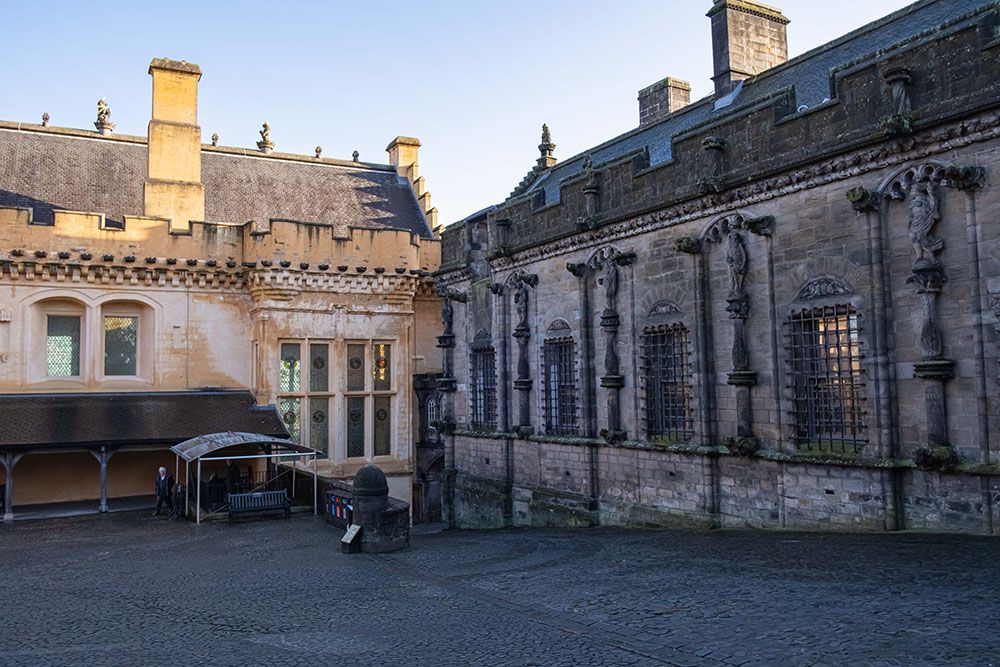
The palace which can be found indoors was the first Renaissance palace in the British Isles. Its architecture takes inspiration from France, with an outer facade decorated with gargoyles and sculptures. The building represents king James V, who had it built, as he wished to be seen: as a king to match the greatest European sovereigns.
Within its interior, besides the palace, other buildings can be found, each one of them being immensely valuable: a chapel, built in the 1500s for the christening of the son of king James VI; the great hall, whose yellow hue returns it to its former glory; the kitchens, discovered in 1921, since they had been buried under a barrage of cannon fire, and in which it can nowadays be seen how a great banquet is cooked. The former royal abodes, now serving as the Argyll Sutherland Highlanders Museum. In my opinion, this is the best castle in Scotland.
En su interior, además del palacio, se encuentran otros edificios, a cada cual más valioso: una capilla, construida en el siglo XVI para el bautizo del hijo del rey Jacobo VI; el gran salón, cuyo color amarillo le devuelve su vieja gloria; las cocinas, descubiertas en 1921 ya que habían quedado sepultadas bajo una batería de cañones, y en las que hoy se puede ver cómo cocinan un gran banquete. Los antiguos aposentos reales, hoy ocupados por el museo del Regimiento de las tierras alta de Argyll y Sutherland. En mi opinión, el mejor castillo de Escocia.
| Tours and trips |
|---|
| Book the Stirling Historic Tour |
| Book the Stirling Castle Tour |
3. William Wallace and the monument to the hero
The history of Scotland, for better or worse, will be closely tied to the character that Mel Gibson embodies in the film Braveheart: William Wallace.
The figure of Wallace has, over the centuries, become a legend, and to this day tourist guides in Scotland speak of him with great passion, remembering and paying homage to the relentless fight of Scottish people in the face of English tyranny. But the battle who would turn him into a hero is that of Stirling Bridge. Indeed, my friend, it was in Stirling that, in 1927, William Wallace and 2 500 Scots, against an army of 10 000 English soldiers, won an epic battle that will be remembered until the end of humankind.
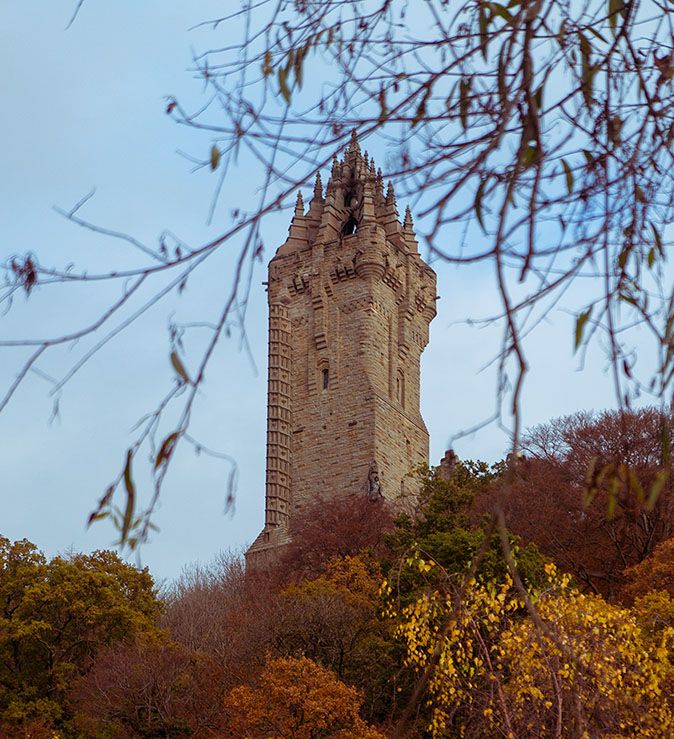
Nowadays, on the place where William Wallace and Andrew of Moray prepared for the battle, a tower stands, the National Wallace Monument, with a height of 64 meters (just over two hundred feet). Within it, the story of this hero and this battle is recounted. Additionally, from atop the monument, you will be able to enjoy some incredible views of Scotland’s mountainous scenery.
4. The Old Town and its streets
Stirling’s old town could be defined as a miniature version of Edinburgh. It is a city that preserves a part of its medieval ramparts, which few towns in the country can boast.
A city brimming with history in which you will be able to find anything from streets built in Georgian architecture to medieval alleys. King Street still retains its grandeur, with its Golden Lion hotel, which has been the most important hotel in the city ever since the 1700s, or the Athenaeum, guarded by a sculpture of William Wallace.
Medieval Stirling was built around the castle, with the houses of the most powerful people always standing in close vicinity to it. Broad Street is a cobblestone street in which a Mercat Cross can be seen, that is, a column crowned by Scotland’s national animal: the unicorn.
When the city started to expand beyond its walls, the powerful were worried about how they would keep the masses under control, so they deemed it necessary to build their own jailhouse. Stirling can boast having two of them. These jailhouses or, as they are known locally, Tollbooth, were humid, unhealthy, and crowded places, which also served as armories, tax collection offices, prisons, and so on. Nowadays, one of them is a center for the arts, and the other is a very entertaining tourist attraction for kids. Here, you may find the link to the website.
Stirling’s Old Town hides secrets and, in one of its churches, the Holy Rude, in 1567, the king who would unite the Scottish and English crowns was crowned. It is now a church which opens during summertime, and it is free to visit. The churchyard is regarded as one of the most beautiful cemeteries to be visited in all of Scotland.
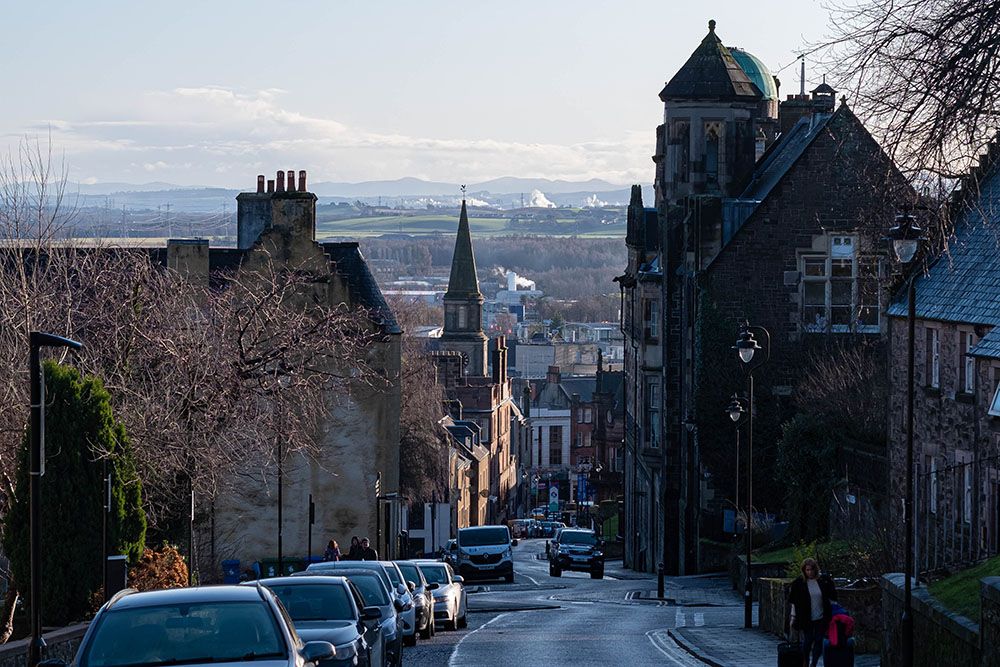
To me, Stirling is a magical city, a city which is packed with history but, above all, a city to be discovered, an unmissable visit if you spend several days in Scotland. I hope you decide to visit it after reading these words!


